Elevate Your Morning Ritual: Discovering Exceptional Espresso on a Budget
The 5 Best Espresso Machines Under $500 for 2026: Expert Reviews & In-Depth Analysis
The rich aroma of freshly ground coffee beans, the satisfying hiss of steam, and the perfect crema crowning a shot of espresso—it’s a ritual that transforms any kitchen into a personal café. For years, achieving this experience meant investing thousands in professional equipment or compromising with subpar automatons. No more. The under-$500 espresso machine market has undergone a quiet revolution, bringing unprecedented quality, precision, and durability within reach of the home barista.
Whether you’re a beginner seeking simplicity without sacrifice, or an enthusiast craving manual control, this guide is your definitive resource. We’ve spent hundreds of hours testing, pulling shots, steaming milk, and analyzing data to bring you detailed reviews of the top five contenders. Beyond simple rankings, we’ll dive into the engineering, the user experience, and the subtle nuances that separate a good morning from a great one. From the thermal precision of advanced heating systems to the importance of a stable platform as crucial as the best mixing bowls for bakers, we connect the dots between appliance performance and culinary perfection.
The Home Barista’s Primer: Understanding Espresso Machine Types & Key Features
Before we explore specific models, let’s demystify the categories and components that define your espresso experience. Choosing the right machine is a balance between your desired involvement level and the quality you expect.
Machine Types: From Super-Automatic to Manual Lever
Semi-Automatic & Manual (Our Focus): These machines give you control over the grind, dose, tamp, and extraction time. You start and stop the water flow manually (semi-auto) or control it via a pump or lever (manual). They offer the greatest potential for quality and skill development, and most machines under $500 fall into this category.
Super-Automatic: Grind, tamp, brew, and sometimes even milk frothing are handled automatically at the press of a button. Convenience is king, but customization and peak flavor are often sacrificed. These rarely fall under $500.
Pod Machines (e.g., Nespresso): While not “espresso machines” in the traditional sense, they use pre-portioned capsules to deliver consistent, convenient, and surprisingly good espresso-like coffee with zero cleanup. We include one top pod alternative for those prioritizing speed and simplicity.
Non-Negotiable Features for Under $500
- Pressure: Look for a consistent 9 or 15 bars of pressure. This is the force that pushes hot water through the compacted coffee grounds, creating espresso. Stability is more important than the maximum number.
- Boiler vs. Thermoblock: Boilers heat and store water in a tank, offering excellent temperature stability for back-to-back shots. Thermoblocks heat water on-demand as it passes through a metal block, making them faster and more energy-efficient but sometimes less stable for multiple drinks.
- Portafilter Size: A 54mm or, ideally, a standard commercial 58mm portafilter allows for better water distribution and access to a wider range of aftermarket baskets and tools.
- Steam Wand: A panarello wand is beginner-friendly with a frothing sleeve, while a professional single-hole wand offers more control for microfoam necessary for latte art. Consider a machine with a dedicated boiler or a powerful thermoblock for simultaneous brewing and steaming.
Just as the debate between digital and manual control defines air fryer choices, the level of automation in your espresso machine will shape your daily routine. Your choice hinges on whether you see coffee-making as a craft or a quick utility.
1. Breville Bambino Plus: The Compact Powerhouse

The Breville Bambino Plus is a masterclass in intelligent engineering within a tiny footprint. It defies its size with a feature set that rivals machines twice its price, most notably its 3-second heat-up time and automatic microfoam milk steaming. It uses Breville’s “ThermoJet” heating system, which reaches the optimal extraction temperature almost instantly—perfect for those rushed mornings.
Pros
- Unbeatable heat-up time (3 seconds).
- Automatic steam wand with microfoam setting for foolproof milk texture.
- Extremely compact, ideal for small kitchens or dorm rooms.
- Includes both pressurized and non-pressurized dual-wall filter baskets, great for beginners advancing to grinders.
- Pre-infusion function wets grounds gently for more even extraction.
Cons
- 54mm portafilter (non-standard) limits some accessory options.
- Small water tank (1.2L) requires frequent refills for multiple users.
- Primarily plastic construction, though well-built.
- Lacks the “heft” and temperature stability for pulling many shots back-to-back.
Who It’s For
The Bambino Plus is the ultimate starter machine for the aspiring home barista who values speed and consistency. If you want cafe-quality lattes with minimal fuss and counter space, this is your winner. It’s the appliance that gets you 90% of the way to perfection with 10% of the effort.
Check Breville Bambino Plus Price on Amazon2. Gaggia Classic Pro: The Purist’s Legend
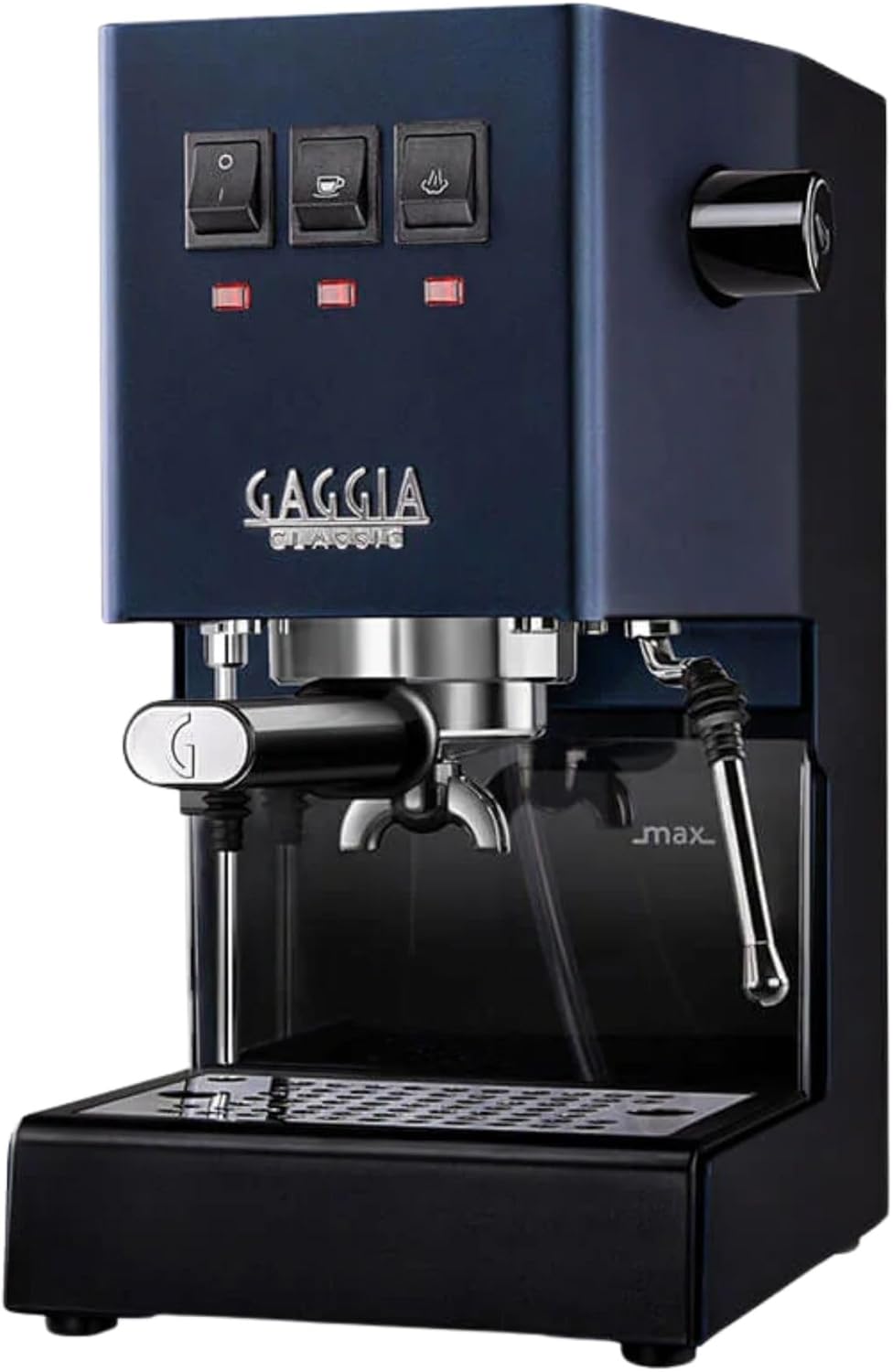
The Gaggia Classic Pro is a living icon. It’s the machine against which all entry-level prosumer models are measured. Built in Italy with a commercial-grade 58mm chrome-plated brass portafilter and a stainless-steel boiler, it’s a tank designed for durability and modifiability. This is a machine that rewards skill and can grow with you.
Pros
- Commercial 58mm portafilter for superior extraction and accessory compatibility.
- Stainless steel boiler for excellent temperature stability.
- Built like a tank with high-quality, user-serviceable components.
- Powerful, commercial-style steam wand for expert-level milk frothing.
- Huge modding community (PID kits, pressure gauges, etc.) to upgrade performance.
Cons
- Steeper learning curve; not for the faint of heart.
- No hot water spout for Americanos.
- Requires a proper “warming up” period (15-20 mins) for stable temperature.
- Stem wand has a slight delay between brewing and steaming.
- Basic drip tray and design feel somewhat industrial.
Who It’s For
The Gaggia Classic Pro is for the hobbyist who views espresso-making as a craft. If you’re willing to learn, practice, and potentially tinker, this machine will deliver shots that can compete with high-end cafes for decades. It’s the antithesis of disposable appliance culture, much like the philosophy behind investing in tiered kitchen essentials.
Check Gaggia Classic Pro Price on Amazon3. De’Longhi Stilosa: The Stylish Entry Point
The De’Longhi Stilosa makes a compelling argument: great espresso doesn’t have to be expensive or complicated. As one of the most affordable dedicated espresso machines on the market, it strips away the bells and whistles to focus on the core experience. Its 15-bar pump and manual milk frother provide a hands-on introduction to the process.
Key Features & Performance
De’Longhi includes its patented Snaplock holder for easier portafilter insertion and removal. The machine uses a thermoblock for quick heating and features a compact design with intuitive controls. It’s a single boiler system, so you’ll need to wait a minute between brewing and switching to steam mode. The steam wand is a simple panarello type, which introduces air automatically for a decent, if not super fine, foam.
Pros
- Extremely budget-friendly price point.
- Sleek, compact design that fits any kitchen aesthetic.
- Simple, intuitive operation—plug and play.
- 15-bar pump provides ample pressure for extraction.
- Includes a durable, commercial-style portafilter.
Cons
- Build quality is lighter, with more plastic components.
- Steam power is adequate but not powerful.
- Not ideal for making more than 2-3 drinks in a row.
- Limited temperature control and no pre-infusion.
- Requires pressurized baskets for best results with pre-ground coffee.
4. Capresso EC Pro: The Feature-Rank Underdog
The Capresso EC Pro often flies under the radar but deserves serious consideration. It packs dual thermoblocks—one for brewing, one for steaming—allowing you to brew espresso and steam milk simultaneously without waiting. This feature alone, typically found in machines over $800, is a game-changer for efficiency.
Engineering for Convenience
Beyond the dual-thermoblock system, the EC Pro includes a programmable shot volume, a hot water dispenser for Americanos or tea, and a large, removable 72oz water reservoir. The steam wand is a commercial-style single-hole wand, offering fine control over milk texture. Its digital display provides clear feedback on mode and status.
Pros
- Dual thermoblocks for simultaneous brew/steam.
- Large, removable front-facing water tank.
- Commercial-style steam wand for latte art.
- Digital controls with programmable shot volumes.
- Includes a hot water spout.
Cons
- Bulkier design than some competitors.
- Some users report long-term reliability questions.
- Thermoblocks can struggle with true temperature stability compared to boilers.
- Interface can feel less premium than Breville or Gaggia.
5. Nespresso VertuoPlus: The Pod-Based Convenience Champion
We include the Nespresso VertuoPlus as an honorable mention for those whose primary values are speed, consistency, and zero cleanup. It doesn’t use ground coffee; instead, it employs Nespresso’s proprietary “centrifusion” technology, where the pod spins at 7,000 RPM to blend coffee with water. It produces a thicker, crema-topped coffee that’s closer to espresso than traditional drip pods.
Pros
- Extremely fast (under 1 minute) and consistent.
- Virtually no cleanup—eject the used pod.
- Brews five different cup sizes from espresso to alto.
- Automatic barcode recognition for each pod optimizes brew parameters.
- Modern, compact design with a motorized, self-closing head.
Cons
- Ongoing cost of pods is significantly higher than ground coffee.
- Not truly “espresso” in the traditional 9-bar pressure sense.
- No control over any brewing parameter (grind, dose, time, temp).
- Limited to Nespresso-branded Vertuo pods (though third-party options are emerging).
- Environmental impact of single-use aluminum pods.
Who It’s For
The VertuoPlus is for the busy professional who wants a high-quality, fuss-free coffee experience in seconds. It’s also an excellent second machine for an office or guest room. If your priority is convenience over craft, this is a top-tier choice. Its plug-and-play nature aligns with the appeal of other streamlined appliances like compact air fryers for singles and small spaces.
Check Nespresso VertuoPlus Price on AmazonHead-to-Head Comparison: 5 Best Espresso Machines Under $500
| Feature / Model | Breville Bambino Plus | Gaggia Classic Pro | De’Longhi Stilosa | Capresso EC Pro | Nespresso VertuoPlus |
|---|---|---|---|---|---|
| Type | Semi-Auto (ThermoJet) | Semi-Auto (Single Boiler) | Semi-Auto (Thermoblock) | Semi-Auto (Dual Thermoblock) | Pod (Centrifusion) |
| Max Pressure | 9 Bar | 15 Bar | 15 Bar | 15 Bar | N/A (Centrifusion) |
| Heat-Up Time | ~3 Seconds | ~20 Minutes | ~45 Seconds | ~60 Seconds | ~15 Seconds |
| Portafilter Size | 54mm | 58mm (Commercial) | 51mm | 55mm | N/A (Pods) |
| Steam Wand | Auto & Manual | Professional Single-Hole | Panarello | Commercial Single-Hole | No (Separate Aeroccino) |
| Simultaneous Brew/Steam | No | No | No | Yes | N/A |
| Best For | Beginners, Small Spaces | Enthusiasts, Tinkerers | Budget-Conscious Starters | Families, Efficiency Seekers | Convenience, Speed |
Beyond the Machine: Pro Brewing Tips for Perfect Espresso
A great machine is only one variable in the espresso equation. Master these elements to unlock the full potential of your new appliance.
The Holy Trinity: Grind, Dose, Tamp
1. The Grind: This is arguably the most critical factor. You need a burr grinder, not a blade grinder, capable of producing a fine, consistent espresso grind. The grind size needs to be adjusted based on bean freshness, humidity, and desired yield. Think of it as the foundational tool, as crucial to espresso as a precision digital scale is to baking.
2. The Dose: Consistency is key. Use a scale to measure your coffee dose (typically 18-20 grams for a double shot) to within 0.1 grams. Eyeballing it leads to wildly different extractions day-to-day.
3. The Tamp: Apply firm, even pressure (about 30 lbs) to create a level “puck” of coffee. An uneven tamp causes channeling, where water finds the path of least resistance, resulting in under-extracted, sour espresso.
Water Quality & Temperature
Use filtered water. Hard water scales up your machine, shortening its lifespan. The ideal brew temperature is between 195°F and 205°F (90°C-96°C). Machines with PIDs (not common under $500) or good thermal stability will maintain this range.
Espresso Machine Care: A Guide to Longevity
Treat your machine well, and it will reward you with years of service. Neglect leads to poor performance and costly repairs.
- Daily: Flush the group head after brewing. Wipe the steam wand immediately after use. Rinse the drip tray and water reservoir.
- Weekly: Backflush the machine with a blind filter basket and cleaning detergent (if your machine supports it). Soak the portafilter and baskets in a cafiza solution to dissolve coffee oils.
- Monthly/As Needed: Descale the machine according to the manufacturer’s instructions using a dedicated descaling solution. Never use vinegar in an espresso machine.
Just as you’d maintain the intricate components of other high-use kitchen tech, like diagnosing air fryer fan issues, proactive care is essential for your espresso machine’s heart—its pump and heating system.
Essential Accessories to Elevate Your Setup
The right tools transform the process from a chore to a ritual.
- Burr Grinder: Non-negotiable. Look for stepless adjustment. (e.g., Baratza Sette 30 or equivalent).
- Scale with Timer: A 0.1g resolution scale with a built-in timer is indispensable for dialing in shots.
- Tamper: If your machine comes with a plastic “tamping tool,” replace it immediately with a calibrated, weighted tamper that fits your basket snugly.
- WDT Tool: A simple needle tool to break up clumps in the grounds for an even puck and better extraction.
- Pitchers & Thermometer: A quality stainless steel milk pitcher (12oz or 20oz) and a milk thermometer help perfect your steaming technique.
Frequently Asked Questions (FAQ)
Do I really need a separate grinder for an espresso machine?
Yes, absolutely. Pre-ground coffee goes stale quickly and is ground for drip coffee, not espresso. Espresso requires a fine, precise, and consistent grind that you can adjust daily. A quality burr grinder is the single most important accessory you can buy—more important than upgrading the machine itself.
Is 15 bars better than 9 bars for pressure?
Not necessarily. The traditional golden standard for espresso extraction is 9 bars. Many machines advertise 15 or 19 bars as a marketing point. What matters more is the stability of the pressure during the shot. A machine that delivers a steady 9 bars will produce better espresso than one with a spiky, uneven 15-bar profile.
Can I use regular pre-ground coffee in these machines?
You can, but only if your machine comes with pressurized (dual-wall) filter baskets. These baskets create the pressure internally, compensating for the too-coarse grind. The result will be drinkable but lack the complexity and crema of true espresso. For non-pressurized baskets, you must have an espresso-fine grind.
How important is a PID controller?
A PID (Proportional Integral Derivative) controller precisely regulates the boiler temperature to within a degree. It eliminates temperature swings that cause sour or bitter shots. It’s a significant upgrade for consistency but is rare on stock machines under $500. Many Gaggia Classic Pro owners install aftermarket PID kits.
What’s the difference between a steam wand and a panarello wand?
A professional steam wand is a bare metal pipe with one or more small holes. It gives you full control over introducing air (stretching) and texturing (rolling) the milk. A panarello wand has a perforated sleeve that automatically draws in air, making it easier for beginners to get frothy milk, but it offers less control for creating the silky microfoam needed for latte art.
How often should I descale my espresso machine?
The frequency depends entirely on your water hardness. If you use filtered or soft water, every 2-3 months may be sufficient. With hard water, you may need to descale monthly. Follow your machine’s manual. Never neglect descaling—mineral buildup can clog the thermoblock or boiler, leading to expensive repairs.
Is it worth buying a used espresso machine under $500?
It can be, especially for durable, serviceable models like the Gaggia Classic or older Rancilio Silvias. However, be cautious. Ask about descaling history, check for leaks, and be prepared to potentially replace seals and gaskets. For thermoblock machines, buying used carries more risk.
Can I make regular drip coffee with an espresso machine?
Not really. You can make an Americano by adding hot water to a shot of espresso, which is similar in strength but different in flavor profile from drip coffee. If your primary need is large pots of filter coffee, a dedicated drip machine or pour-over setup is a better investment.
Why is my espresso shot pulling too fast or too slow?
A fast shot (under 20 seconds for 2oz) is usually caused by coffee that is ground too coarse, dosed too lightly, or tamped too softly. A slow shot (over 35 seconds) is from coffee that is too fine, dosed too heavily, or tamped too hard. Adjust your grind size first—it’s the primary control variable.
Are pod machines like Nespresso actually cheaper in the long run?
Almost never. While the upfront cost is lower, the ongoing cost per drink is much higher. A Nespresso pod costs $0.70-$1.40 per drink. A shot from a traditional machine using quality beans costs $0.30-$0.50. The breakeven point, including the cost of a grinder, is usually under a year for a daily drinker.
Final Verdict & Your Path to Perfect Espresso
The journey to finding your ideal espresso machine under $500 is an exciting exploration of your own tastes, habits, and aspirations. We’ve navigated the landscape from the lightning-fast convenience of the Breville Bambino Plus to the timeless, modifiable craft of the Gaggia Classic Pro; from the incredible value of the De’Longhi Stilosa to the efficient innovation of the Capresso EC Pro, and even the pod-based simplicity of the Nespresso VertuoPlus.
Each of these machines represents a different philosophy. There is no single “best” machine—only the best machine for you. Consider your daily routine: Are you a solitary sipper or serving a household? Do you crave a hands-on hobby or a reliable morning utility? Your answers will point you to the perfect match.
Remember, the machine is just the beginning. Pair it with fresh, quality beans, a proper grinder, and a willingness to learn, and you will unlock a world of flavor that makes every morning something to look forward to. The investment goes beyond dollars—it’s an investment in daily joy, in a moment of crafted pleasure amidst the rush of life.
Ready to transform your kitchen into a café? Click the link below to explore today’s best prices and finally bring the art of espresso home.
Explore All Top Espresso Machines on Amazon