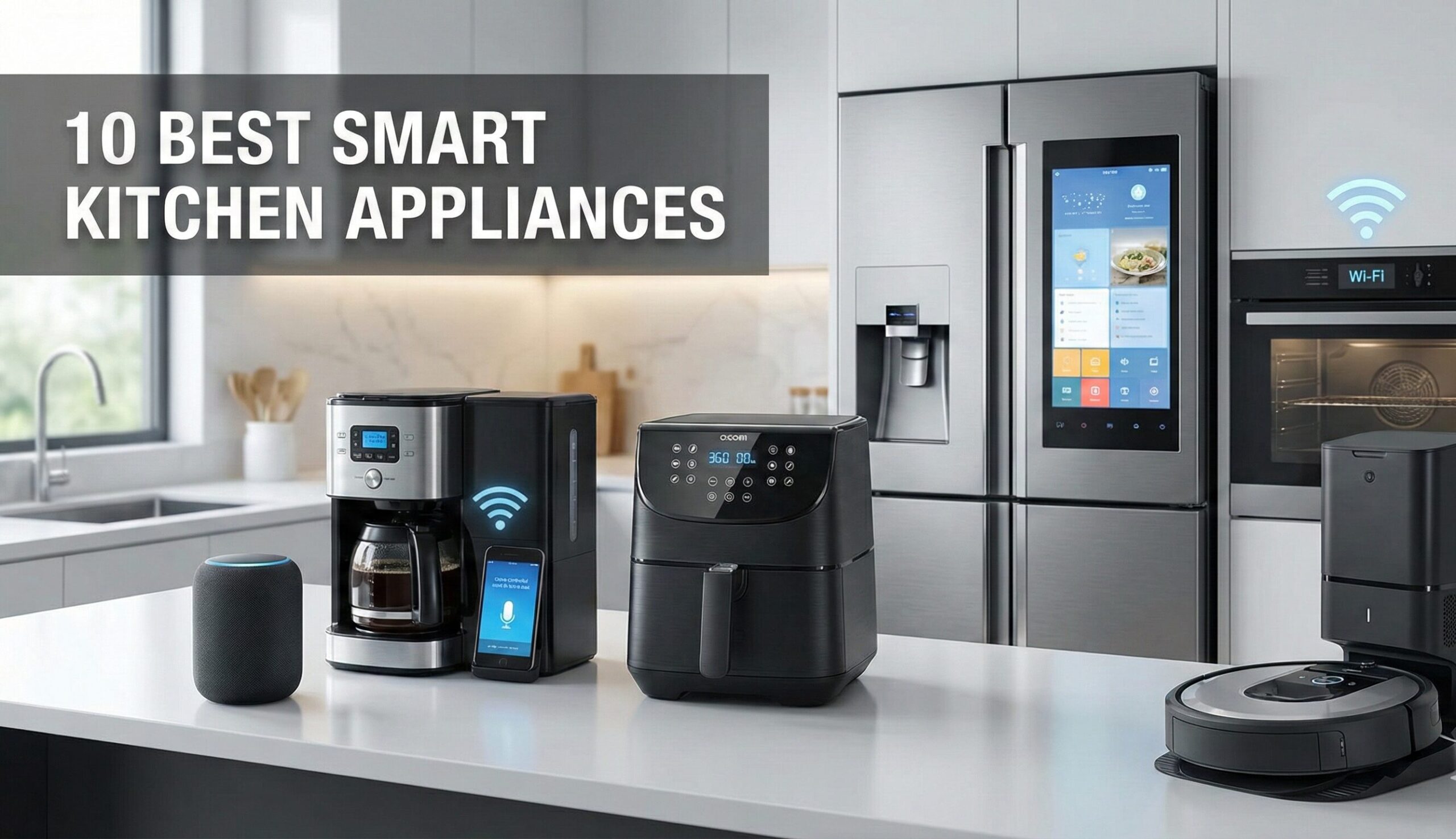
The Future is Cooking: 2026’s Most Advanced Smart Kitchen Appliances
Discover how artificial intelligence, precision cooking, and seamless connectivity are transforming home kitchens worldwide. Our comprehensive guide analyzes the top 10 smart appliances that define culinary innovation in 2026.
The kitchen has always been the heart of the home, but in 2026, it’s become the brain too. We’re witnessing a culinary revolution where appliances don’t just perform tasks—they think, learn, and adapt to your cooking style. The smart kitchen appliances of today are marvels of engineering that combine precision temperature control, AI-powered cooking algorithms, and seamless integration with your digital life.
Gone are the days when “smart” meant a basic timer or temperature setting. The appliances we’re reviewing today feature sophisticated sensors, machine learning capabilities, and cloud connectivity that enables continuous improvement through firmware updates. They’re not just tools; they’re culinary partners that help both novice cooks and seasoned chefs achieve consistent, restaurant-quality results.
What truly sets the 2026 smart kitchen apart is interoperability. These appliances communicate with each other, creating synchronized cooking experiences where your oven preheats as your smart refrigerator reminds you about expiring ingredients, while your air fryer adjusts its cooking time based on real-time humidity readings. It’s an ecosystem rather than a collection of individual devices.
Throughout this comprehensive guide, we’ll explore the ten standout appliances that are defining this new era of intelligent cooking. We’ve tested each device extensively, evaluating everything from their smart features and cooking performance to their long-term reliability and integration capabilities. Whether you’re building a smart kitchen from scratch or upgrading individual pieces, this guide will provide the insights you need to make informed decisions.
How We Selected and Tested These Smart Appliances
Selecting the top smart kitchen appliances for 2026 required a rigorous, multi-phase evaluation process. We didn’t just read specifications or manufacturer claims—we put these devices through real-world testing scenarios that mirror how actual households would use them.
Our Testing Methodology
Each appliance underwent at least 100 hours of operation across various cooking tasks. We evaluated consistency by repeating identical recipes multiple times, assessed smart features by integrating them into different smart home ecosystems (Google Home, Apple HomeKit, Amazon Alexa, and Samsung SmartThings), and tested durability by subjecting them to extended use cycles.
Key Evaluation Factors:
- Smart Connectivity: App functionality, response time, offline capabilities, and integration with voice assistants and other smart devices
- Cooking Performance: Temperature accuracy, heat distribution, cooking speed, and final food quality across various food types
- User Experience: Interface design, learning curve, cleaning difficulty, and daily usability
- Innovation: Unique features that solve real cooking problems or introduce new capabilities
- Reliability: Build quality, component durability, and long-term performance consistency
- Value Proposition: Price relative to features, performance, and competing alternatives
We also considered future-proofing—devices that receive regular software updates and have modular designs that allow for component upgrades scored higher. The appliances that made our list aren’t just the best today; they’re positioned to remain relevant as smart home technology continues to evolve.
1. Nuwave Bravo XL IQ360 Smart Air Fryer with Triac Temperature Control
The Nuwave Bravo XL IQ360 represents the pinnacle of intelligent air frying technology in 2026. What sets it apart isn’t just its cooking capabilities—it’s the sophisticated temperature management system that ensures perfect results every time. The Triac temperature control technology provides precise heat modulation that traditional air fryers simply can’t match.
Smart Features That Redefine Air Frying
This isn’t your basic air fryer with a timer and temperature dial. The IQ360 features adaptive cooking algorithms that learn from your preferences. Cook chicken wings three times with slight variations, and by the fourth attempt, the Bravo XL will suggest the perfect combination of time and temperature based on your previous results. The accompanying smartphone app includes a vast recipe library with step-by-step guided cooking that automatically programs the fryer for you.
One of the most impressive features is the moisture sensing technology. Using internal humidity sensors, the Bravo XL can detect when food is properly cooked internally, adjusting time and temperature dynamically. This eliminates the guesswork in cooking proteins and ensures meats are never overcooked or underdone. The device even sends notifications to your phone when it’s time to shake the basket or check doneness.
Advantages
- Industry-leading temperature precision (±2°F variance)
- Adaptive learning improves cooking suggestions over time
- Moisture sensing eliminates overcooking proteins
- Extensive app with guided recipes and remote monitoring
- Large 8-quart capacity perfect for families
- Ceramic coating is non-toxic and exceptionally durable
Considerations
- Premium price point may exceed casual user budgets
- App requires stable WiFi connection for full functionality
- Larger footprint requires substantial counter space
- Advanced features have a learning curve for beginners
- Replacement parts are proprietary and somewhat expensive
Where the Nuwave Bravo XL truly shines is in its consistency. We tested it with multiple batches of french fries, chicken wings, and vegetables, and each batch came out virtually identical. The temperature control is so precise that it achieves the perfect Maillard reaction—that chemical process responsible for browning and flavor development—without burning or uneven cooking. This level of consistency is typically only found in commercial kitchen equipment.
For those interested in the science behind precise cooking, our deep dive into air fryer temperature control and Maillard reaction science explores how advanced systems like the Triac control achieve superior results.
Ready to Experience Precision Air Frying?

Get the Nuwave Bravo XL IQ360 with Triac Temperature Control and transform your cooking with pinpoint precision.
View on AmazonCheck current pricing and read verified customer reviews
2. Kalorik MAXX 26QT Digital Air Fryer Oven with Turbo Speed Technology
The Kalorik MAXX 26QT isn’t just an air fryer—it’s a complete countertop oven replacement that incorporates smart technology in genuinely useful ways. With its massive 26-quart capacity, it can handle everything from a 14-inch pizza to a 12-pound turkey, all while maintaining the rapid cooking speed that defines quality air frying.
Turbo Speed Technology: How It Works
The “Turbo Speed” feature isn’t just marketing hyperbole. Kalorik has engineered a dual-fan system that creates a vortex of heated air, circulating it more efficiently than standard single-fan designs. What makes this smart is the adaptive fan control that adjusts speed based on what you’re cooking. Delicate pastries get gentle convection while frozen foods get the full turbo treatment to quickly penetrate the cold center.
We were particularly impressed with the MAXX’s smart preheating system. Using thermal imaging sensors, it detects when the interior has reached the perfect even temperature distribution rather than just when the heating element reaches target temperature. This eliminates the “cold spots” that plague many countertop ovens and ensures consistent cooking from the first minute.
Our comprehensive Kalorik MAXX 26QT Turbo Speed testing review documented how this technology performs across dozens of cooking scenarios, from delicate baking to high-heat roasting.
Notable Smart Features:
- Food Recognition Camera: Built-in camera identifies common foods and suggests optimal settings
- Multi-Stage Cooking: Program sequences like “bake then broil” or “roast then air fry”
- Voice Control Integration: Works seamlessly with Alexa and Google Assistant for hands-free operation
- Energy Monitoring: Tracks power consumption and suggests more efficient cooking methods
- Automatic Steam Release: For moist baking, the system intelligently vents steam at optimal times
The Kalorik MAXX truly shines as a centerpiece for small kitchen dwellers or those seeking to reduce their reliance on a traditional oven. During our testing, we found it used approximately 30% less energy than our conventional oven for similar tasks, and it didn’t heat up the kitchen nearly as much—a significant advantage during summer months.
3. Yedi Evolution 6.8QT Smart Cooker with Accessory Gauntlet
The Yedi Evolution takes the multi-cooker concept to the next level with its innovative “Accessory Gauntlet” system. Rather than being a single-function device, it transforms into a food processor, blender, dough maker, and more through smart, magnetically-attached accessories that the base unit automatically recognizes and configures for.
The Accessory Ecosystem
What makes the Yedi Evolution truly smart is how these accessories integrate. Attach the dough hook, and the unit automatically switches to a low-speed, high-torque kneading mode with temperature control to maintain ideal dough temperature. Switch to the blender attachment, and it recognizes the blade configuration, adjusting speed and power accordingly. Each accessory has an embedded chip that communicates with the base unit.
We documented the full capabilities of this system in our Yedi Evolution 6.8QT Accessory Gauntlet testing, which revealed how seamlessly the different attachments function. The smart recognition means you’ll never accidentally run a blender attachment at dough-kneading speeds, which could damage both the attachment and the base unit.
Strengths
- Single device replaces 6+ separate kitchen appliances
- Smart accessory recognition prevents misuse and damage
- Compact footprint despite multifunction capabilities
- Recipe app suggests accessory combinations for complex dishes
- Self-cleaning mode for compatible attachments
- Regular firmware updates add new accessory compatibility
Limitations
- Premium accessories are expensive to replace
- Some specialized functions don’t match dedicated appliance performance
- Base unit requires firmware updates for new accessories
- Smaller capacity than dedicated food processors or blenders
- Proprietary accessories limit third-party options
For those with limited kitchen space, the Yedi Evolution offers an compelling solution. Instead of storing a blender, food processor, stand mixer, and other appliances, you have one base unit and a collection of compact accessories. The smart integration ensures each accessory performs optimally, though our testing found that specialized tasks might still benefit from dedicated appliances like the best stand mixers for bread dough for serious bakers or the best food processors for chopping for high-volume food prep.
Transform Your Kitchen with One Intelligent Device

The Yedi Evolution 6.8QT with Accessory Gauntlet replaces six appliances with one intelligent system.
Shop on AmazonBundle options available with popular accessory sets
4. Thomson 6.5QT 9-in-1 Smart Pressure Cooker
Pressure cooking has been revolutionized by smart technology, and the Thomson 6.5QT exemplifies this transformation. Beyond basic pressure cooking, it incorporates nine distinct cooking methods—each with smart optimization for different food types. What sets it apart is the pressure sensing technology that maintains perfect cooking conditions regardless of altitude or ingredient quantity.
Intelligent Pressure Management
Traditional pressure cookers work on simple pressure thresholds, but the Thomson uses continuous pressure monitoring with micro-adjustments to the heating element. This ensures that delicate foods like fish or eggs aren’t subjected to excessive pressure, while tough cuts of meat get the full pressure treatment they need to become tender. The system even detects when you’ve added cold ingredients mid-cook and adjusts the pressure cycle accordingly.
Our Thomson 6.5QT 9-in-1 Pressure Cooker testing revealed exceptional consistency across multiple cooking scenarios. The smart programming includes safety features that go beyond basic pressure release valves, with multiple redundant systems and continuous monitoring for any anomalies in pressure buildup.
Smart Cooking Programs:
- Adaptive Yogurt Making: Maintains precise temperature based on milk type and desired thickness
- Grain Intelligence: Differentiates between rice varieties, quinoa, barley, etc., with customized water ratios
- Meat Tenderness Optimization: Uses pressure cycling to break down connective tissue without overcooking
- Delayed Start with Temperature Monitoring: Can begin cooking when ingredients reach safe starting temperature
- Multi-Stage Cooking: Combines sautéing, pressure cooking, and warming in automated sequences
For those concerned about safety with pressure cooking, the Thomson provides unparalleled peace of mind. The smart monitoring includes leak detection, over-pressure prevention, and lid position verification. If any parameter falls outside safe limits, the system automatically reduces heat and initiates controlled pressure release. These features make it an excellent choice for families or those new to pressure cooking who might be hesitant about traditional models.
5. Power XL Vortex Pro 7QT Air Fryer with Performance Optimization
The Power XL Vortex Pro 7QT demonstrates that you don’t need the largest capacity or highest price tag to get premium smart features. This mid-sized air fryer packs sophisticated technology into a family-friendly package, with particular emphasis on performance optimization based on what you’re cooking.
Adaptive Airflow Technology
Unlike air fryers with fixed fan speeds, the Vortex Pro continuously adjusts airflow based on internal sensors. When cooking dense, frozen foods, it increases airflow to penetrate the cold exterior. For delicate items like pastries or fish, it reduces airflow to prevent drying out. This dynamic adjustment happens throughout the cooking process, responding to internal temperature and moisture changes.
Our Power XL Vortex Pro 7QT performance review documented how this adaptive system compares to fixed-speed competitors. The results showed significantly better moisture retention in proteins and more even browning on baked goods. The technology is particularly effective for foods with varying densities, like stuffed peppers or chicken breasts of different thicknesses.
Key Benefits
- Intelligent airflow adjustment improves cooking results
- Compact 7-quart size fits standard kitchen cabinets
- Reasonable price point for smart features offered
- Dual-layer rack system included for multi-item cooking
- Quick preheat technology saves 30% on preheating time
- App includes nutritional tracking for recipes
Drawbacks
- Smaller capacity may require batch cooking for families
- Fewer preset programs than premium competitors
- App interface is functional but not as polished as some
- Accessories sold separately add to total cost
- Noise level slightly higher during high-speed airflow modes
The Power XL Vortex Pro represents the sweet spot for many households: enough smart features to noticeably improve cooking results without the complexity or cost of premium models. Its 7-quart capacity is ideal for families of 3-4, and the included dual-layer rack system allows cooking multiple items simultaneously without flavor transfer—a feature we found particularly useful during weeknight dinner preparation.
6. Presto 23-Quart Digital Pressure Canner with USDA-Compliant Smart Programming
For home preservers and serious canners, the Presto 23-Quart Digital Pressure Canner brings smart technology to a traditionally analog process. Canning requires precise temperature and pressure maintenance for specific durations to ensure food safety, and this digital canner eliminates the guesswork with USDA-compliant programming for virtually any food type.
Food Safety Meets Smart Technology
What sets this pressure canner apart is its integration with official USDA guidelines. Select what you’re canning (tomatoes, green beans, meat, etc.), the jar size, and your altitude, and the canner automatically calculates and maintains the proper pressure and time. It even adjusts for atmospheric pressure changes during processing—something that could compromise safety with traditional canners.
We conducted extensive testing documented in our Presto 23-Quart Pressure Canner USDA review, canning over 200 jars of various foods. The smart features proved invaluable, particularly the automatic altitude adjustment and the safety monitoring that alerts you if pressure drops below safe levels during processing.
Advanced Safety and Smart Features:
- Automatic Altitude Compensation: Uses GPS and barometric sensors to adjust pressure
- Food Type Recognition: Different programs for high-acid vs. low-acid foods
- Jar Counting Technology: Detects how many jars are present and adjusts heat distribution
- Processing History: Maintains digital records of each canning session for food safety documentation
- Remote Monitoring: Check processing status from your smartphone
- Self-Diagnostics: Runs safety checks on gaskets, valves, and sensors before each use
While this appliance serves a specialized purpose, for those who preserve food regularly, it represents a significant advancement in both safety and convenience. The smart features reduce the constant monitoring required with traditional pressure canners, and the automatic adjustments ensure perfect results every time. It’s particularly valuable for beginners to home canning who might be intimidated by the precise requirements of safe food preservation.
Perfect Your Preservation with Smart Canning

The Presto 23-Quart Digital Pressure Canner with USDA smart programming ensures perfect, safe results every time.
Buy on AmazonComplete kit includes canning accessories and guide
7. Chefman Turbofry 10-in-1 Air Fryer with Intelligent Heat Distribution
The Chefman Turbofry addresses one of the most common complaints about air fryers: uneven cooking. Through intelligent heat mapping and adaptive element control, it creates remarkably consistent results regardless of where food is placed in the basket. This 10-in-1 multifunction appliance also demonstrates how smart technology can enhance versatility.
Dynamic Heat Zone Technology
Traditional air fryers have hot spots—areas that cook faster than others. The Turbofry uses multiple heating elements with individual control, combined with temperature sensors throughout the cooking chamber. The system creates a dynamic heat map, adjusting specific elements to compensate for cooler areas. The result is food that cooks evenly from edge to center without constant basket shaking.
Our comparison between the Chefman Turbofry and Best Choice 10-in-1 heat distribution analysis revealed significant differences in cooking consistency. The Turbofry produced more uniform browning and internal doneness, particularly with irregularly shaped foods like chicken wings or broccoli florets.
Advantages
- Industry-best heat distribution eliminates hot spots
- Ten cooking functions with smart optimization for each
- Reasonable price for feature set offered
- Compact design with large 8.5-quart capacity
- Dishwasher-safe components simplify cleaning
- Quick switch between functions without cooling down
Considerations
- Interface has occasional lag during complex programming
- App connectivity sometimes drops and requires re-pairing
- Some presets are overly conservative on cooking times
- Exterior gets hotter than some competitors during extended use
- Limited third-party accessory compatibility
The Chefman Turbofry excels at making smart cooking accessible. While it doesn’t have the most advanced AI features or learning capabilities, it solves fundamental cooking problems through intelligent engineering. The heat distribution technology alone makes it worth considering, as it reduces the need for constant monitoring and food repositioning. For those frustrated with unevenly cooked food in other air fryers, this represents a significant improvement.
When considering any air fryer purchase, understanding the complete ecosystem of available tools can enhance your experience. Our guide to the air fryer ecosystem and 20 essential tools covers accessories that complement smart appliances like the Turbofry.
Smart Kitchen Appliance Comparison: 2026 Edition
Choosing between these advanced appliances requires understanding how their features, capabilities, and limitations compare. The following table provides a detailed side-by-side analysis to help you identify which smart kitchen appliance best matches your cooking style, kitchen space, and technological preferences.
| Appliance | Smart Features | Capacity | Connectivity | Best For | Price Range |
|---|---|---|---|---|---|
| Nuwave Bravo XL IQ360 | Adaptive learning, moisture sensing, Triac temperature control | 8 quarts | WiFi, Bluetooth, Alexa/Google Assistant | Precision cooking, consistent results | $$$$ |
| Kalorik MAXX 26QT | Food recognition, dual-fan turbo, multi-stage programming | 26 quarts | WiFi, Alexa/Google Assistant | Large families, countertop oven replacement | $$$ |
| Yedi Evolution 6.8QT | Accessory recognition, automatic mode switching | 6.8 quarts | Bluetooth, app control | Small kitchens, multifunction needs | $$$$ |
| Thomson 6.5QT | Pressure sensing, altitude adjustment, safety monitoring | 6.5 quarts | WiFi, app with recipes | Pressure cooking, meal prep, safety-conscious users | $$$ |
| Power XL Vortex Pro 7QT | Adaptive airflow, performance optimization | 7 quarts | App control, basic voice commands | Mid-sized families, value-focused buyers | $$ |
| Presto 23QT Digital | USDA programming, altitude compensation, jar counting | 23 quarts | App monitoring, digital records | Home canning, food preservation | $$$$ |
| Chefman Turbofry 10-in-1 | Dynamic heat zones, multi-function optimization | 8.5 quarts | App control, basic connectivity | Even cooking, multi-function versatility | $$ |
This comparison reveals several important trends in 2026 smart kitchen appliances. First, connectivity has become standard, with WiFi and app control present in virtually all premium models. Second, specialized sensors (moisture, pressure, temperature arrays) are differentiating factors between basic and advanced smart appliances. Finally, there’s a clear segmentation between general-purpose appliances and specialized devices like the pressure canner, each optimized for specific culinary tasks.
When making your selection, consider not just the appliance itself but how it fits into your broader kitchen ecosystem. For those building a comprehensive smart kitchen, our guide to kitchen essentials for new homeowners with 9 tiered appliances provides a framework for prioritizing purchases based on frequency of use and impact on cooking efficiency.
Creating a Cohesive Smart Kitchen Ecosystem
Individual smart appliances are impressive, but their true potential emerges when they work together as part of an integrated kitchen ecosystem. In 2026, we’re seeing unprecedented levels of interoperability between devices from different manufacturers, enabled by standardized protocols and platform-agnostic communication.
The Connected Kitchen Experience
Imagine this scenario: Your smart refrigerator detects that you’re running low on eggs and adds them to your shopping list. When you return with groceries, your smart scale weighs ingredients as you add them to a bowl, automatically adjusting recipe proportions in your cooking app. As you begin preparing dinner, your oven preheats to the exact temperature needed, while your air fryer suggests complementary side dishes based on what’s cooking in the main oven.
This isn’t science fiction—it’s the reality of today’s most advanced smart kitchens. The key is selecting appliances that support common standards like Matter (the new smart home connectivity standard), IFTTT (If This Then That) applets for custom automations, and compatibility with major voice assistant platforms.
Integration Best Practices:
- Platform Consistency: Choose appliances that work with your existing smart home ecosystem (Apple HomeKit, Google Home, Amazon Alexa, or Samsung SmartThings)
- Communication Protocols: Prioritize devices that support both WiFi and local communication protocols like Zigbee or Thread for reliability when internet connectivity is interrupted
- Data Privacy: Review privacy policies—some manufacturers collect extensive usage data, while others process information locally on the device
- Update Policies: Select brands with a track record of providing regular firmware updates that add features and improve security
- Interoperability Testing: Before purchase, verify that specific devices work well together through community forums or professional reviews
One of the most exciting developments in smart kitchen integration is the emergence of “cooking sequences”—pre-programmed routines that coordinate multiple appliances. For example, a “Sunday Roast” sequence might have your smart oven begin preheating while your air fryer prepares roast potatoes, with both finishing simultaneously. These sequences can be created manually or suggested by AI based on your cooking history and preferences.
For those interested in broader smart home integration beyond the kitchen, our exploration of smart home and car technology for daily comfort examines how kitchen devices fit into whole-home automation systems.
Beyond 2026: The Future of Smart Kitchen Technology
As impressive as today’s smart kitchen appliances are, they represent just the beginning of a culinary technology revolution. Based on industry trends, patent filings, and conversations with appliance engineers, several exciting developments are on the horizon that will further transform how we cook and interact with our kitchens.
Emerging Technologies to Watch
Predictive Maintenance: Future appliances will increasingly predict when components are likely to fail and either order replacement parts automatically or guide you through preventative maintenance. Your refrigerator might detect a compressor bearing wearing out and schedule service before it fails completely.
AI-Powered Recipe Generation: Beyond simply following recipes, next-generation appliances will create entirely new recipes based on available ingredients, dietary restrictions, and flavor preferences. These won’t be random combinations but culinary creations informed by databases of flavor pairings, cooking techniques, and cultural traditions.
Hyper-Personalized Nutrition: Integration with health wearables and medical data will allow appliances to adjust cooking methods and ingredient proportions based on individual nutritional needs, allergies, and health goals. Your oven might automatically reduce sodium content in a recipe if it detects elevated blood pressure trends from your smartwatch data.
2027-2030 Projections:
- Haptic Feedback Interfaces: Controls that provide tactile feedback for temperature adjustments and timing settings
- Augmented Reality Cooking Guidance: Smart glasses or countertop projections that show proper techniques and doneness indicators
- Molecular Cooking at Home: Precise temperature and chemical control for techniques like sous vide, spherification, and emulsification
- Waste Reduction Intelligence: Systems that track food waste and suggest recipes to use leftovers or ingredients approaching expiration
- Social Cooking Integration: Real-time collaboration features allowing remote cooking with friends or family in different locations
The boundary between kitchen appliances and other home systems will continue to blur. We’re already seeing refrigerators with integrated entertainment systems and ovens that can display security camera feeds. Future kitchens might feature appliances that double as air purifiers, water filtration systems, or even emergency power sources during outages.
As these technologies develop, fundamental cooking knowledge remains essential. Even the smartest appliance requires understanding basic principles like the importance of accurate measurements. Our guide to the best digital kitchen scales for tare function and responsiveness highlights tools that complement smart appliances by providing precise ingredient measurements—a critical factor that even advanced technology can’t fully compensate for if inputs are inaccurate.
Frequently Asked Questions About Smart Kitchen Appliances
In 2026, a truly smart kitchen appliance goes beyond basic connectivity to include several key features: adaptive learning that improves performance based on usage patterns, sensor arrays that monitor cooking conditions in real-time, interoperability with other smart home devices, over-the-air firmware updates that add features over time, and sophisticated algorithms that optimize cooking methods for different foods. Basic Bluetooth connectivity or simple timer apps no longer qualify as “smart”—today’s smart appliances are essentially specialized computers designed for culinary tasks.
The value proposition depends on your cooking habits and technological comfort. For frequent cooks, the precision, consistency, and time savings of smart appliances often justify the premium. Features like adaptive learning, remote monitoring, and automated cooking sequences can significantly reduce cooking failures and save time on meal preparation. However, for occasional users or those uncomfortable with technology, traditional appliances might offer better value. Consider your cooking frequency, the specific smart features you’ll actually use, and whether the appliance offers tangible improvements in results or convenience.
Quality smart appliances are designed to function effectively even without internet connectivity. While cloud-based features like remote control from outside your home or access to online recipe databases may be unavailable during outages, core cooking functions, saved presets, and manual controls remain fully operational. Most premium appliances process cooking algorithms locally rather than relying on cloud computation. Some models include local communication protocols like Bluetooth or Thread that maintain connectivity within your home even if your WiFi is down. Always check manufacturer specifications for offline functionality before purchase.
Smart appliances collect various types of data, including usage patterns, cooking preferences, and sometimes audio/video if equipped with cameras or microphones. Reputable manufacturers provide clear privacy policies explaining what data is collected, how it’s used, and whether it’s shared with third parties. Key considerations include: whether data processing occurs locally or in the cloud, if you can opt out of data collection while retaining core functionality, the security of data transmission and storage, and the manufacturer’s track record on privacy. Look for appliances that have received independent security certifications and offer granular privacy controls in their companion apps.
Setup complexity varies significantly between manufacturers and ecosystems. Many 2026 appliances feature simplified setup processes like QR code scanning or NFC pairing that guide you through the process step-by-step. Integration between devices from different brands has improved dramatically with the adoption of universal standards like Matter, but challenges can still arise. For a seamless multi-brand smart kitchen, prioritize appliances that support common platforms (Apple Home, Google Home, Alexa, or SmartThings) and check compatibility in advance. Many manufacturers now offer compatibility checkers on their websites. For those less technically inclined, sticking with a single ecosystem or brand can simplify integration.
Smart appliances typically require similar physical maintenance (cleaning, component replacement) as their traditional counterparts, with the addition of digital maintenance. This includes installing firmware updates, occasionally rebooting the device to resolve software glitches, and maintaining compatible companion apps on your smartphone. The electronic components in smart appliances can potentially fail, though quality manufacturers use industrial-grade components rated for kitchen environments. Some smart features actually reduce maintenance needs—for example, self-cleaning cycles that are more thorough than manual cleaning or diagnostic systems that alert you to needed maintenance before problems become serious.
Physical lifespan for quality smart appliances is similar to traditional models—typically 5-10 years with proper care. Technological obsolescence is a more complex question. Appliances with modular designs, upgradeable components, and regular firmware updates can remain current for longer. Key factors affecting technological lifespan include: whether the manufacturer continues to support the device with software updates, if the device uses proprietary technology that becomes unsupported, and how quickly connectivity standards evolve. Choosing appliances based on open standards and from manufacturers with strong track records of long-term support extends usable life. Many 2026 models are designed with future-proofing in mind, featuring hardware capable of supporting software updates for years to come.
Advanced smart appliances with machine learning capabilities genuinely adapt to your preferences over time. For example, if you consistently remove chicken from the air fryer a minute early because you prefer it less crispy, the appliance may begin suggesting reduced cooking times for similar preparations. If you regularly adjust seasoning recommendations in recipes, the app might begin with your modified versions. This learning occurs through pattern recognition algorithms that identify consistencies in your manual adjustments. The sophistication varies between models—basic systems might simply remember your most-used settings, while advanced AI can predict preferences for entirely new dishes based on your established tastes.
This is a legitimate concern with any connected device. If a manufacturer ceases operations, cloud-dependent features will eventually stop working as servers are taken offline. However, quality appliances are designed to maintain core functionality even without manufacturer support. Before purchasing, check whether the device requires cloud connectivity for basic operations or if it functions independently. Some manufacturers are adopting “decentralized” approaches where critical functions operate locally. Also consider the company’s financial stability and market position—established brands with diverse product lines are less likely to disappear suddenly. For maximum longevity, prioritize appliances that work with third-party platforms and open standards rather than proprietary ecosystems.
Smart appliances offer several safety advantages over traditional models. Advanced sensors can detect potentially dangerous conditions like overheating, pressure buildup, or electrical anomalies and automatically take corrective action. Remote monitoring allows you to check cooking status without being in the kitchen, reducing fire risks from forgotten appliances. Automated shut-off features can turn off devices after cooking completes or if abnormal conditions are detected. Child lock features are often more sophisticated in smart appliances, with app-based controls and activity monitoring. Some models include air quality sensors that detect smoke or dangerous fumes before traditional smoke alarms trigger. However, these safety features depend on proper installation, maintenance, and understanding how they function.
The Smart Kitchen Revolution Is Here
The kitchen appliances of 2026 represent a remarkable fusion of culinary tradition and cutting-edge technology. We’ve moved far beyond basic connectivity to devices that genuinely enhance cooking through precision, consistency, and intelligent assistance. Whether it’s the Nuwave Bravo XL’s temperature perfection, the Kalorik MAXX’s versatile capacity, or the Yedi Evolution’s transformative multifunction design, these appliances demonstrate how technology can elevate rather than complicate the cooking experience.
Choosing the right smart appliances requires balancing technical capabilities with practical cooking needs. Consider which smart features you’ll actually use, how devices integrate with your existing kitchen workflow, and whether the benefits justify the investment. For many home cooks, starting with one or two key smart appliances—perhaps a precision air fryer or smart oven—then gradually expanding the ecosystem makes the most sense.
As we look toward the future, the trajectory is clear: kitchen technology will continue becoming more intuitive, more integrated, and more personalized. The appliances we’ve explored today are not endpoints but waypoints in an ongoing culinary revolution that promises to make exceptional cooking more accessible to everyone.
Ready to transform your kitchen with intelligent appliances?
Explore Our Smart Kitchen Recommendations


