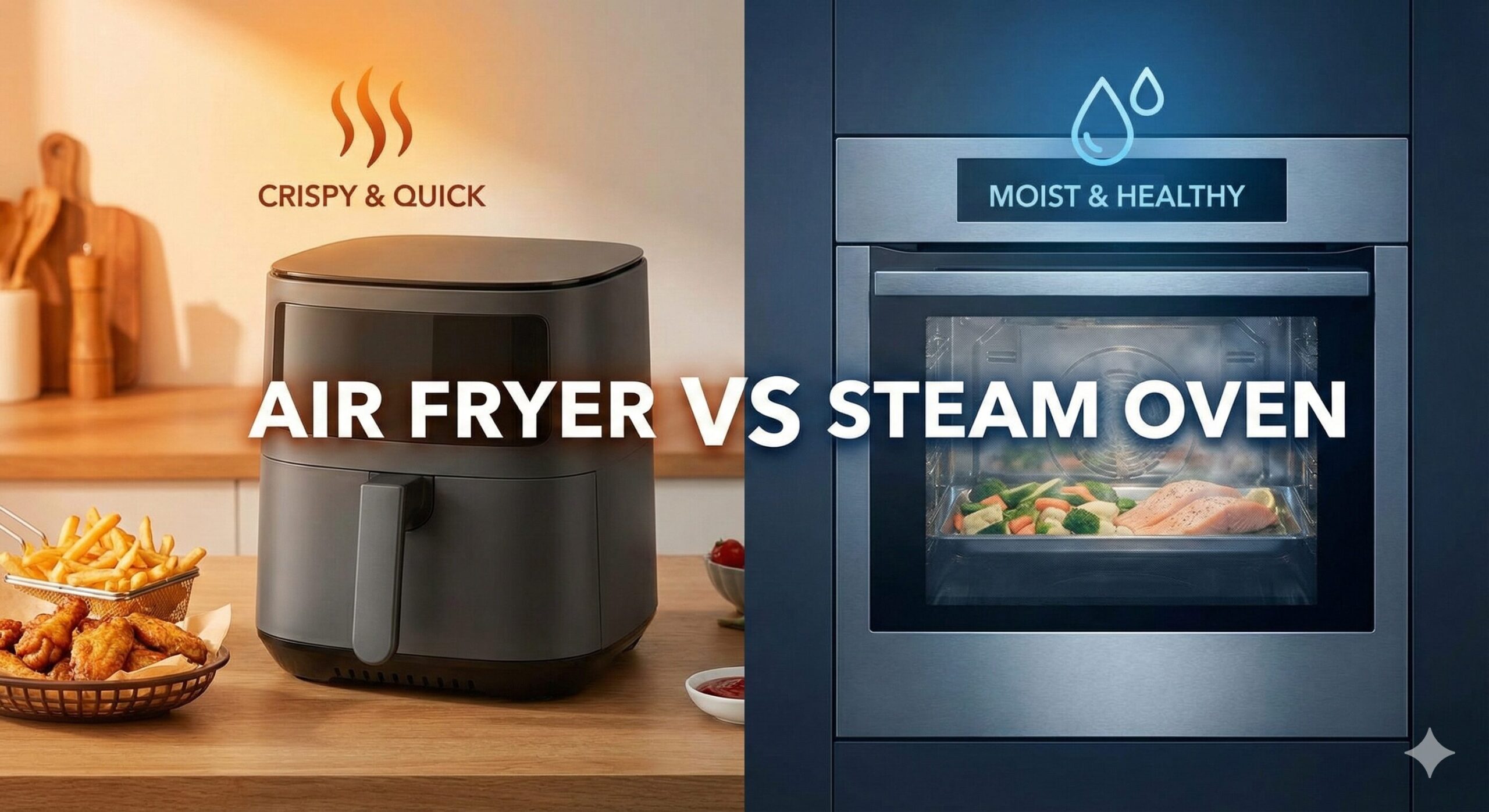
Air Fryer vs. Steam Oven: The Battle of Crisp vs. Moist
In the modern quest for healthier, faster cooking, two appliances have risen to the top of the food chain: the aggressive, high-speed Air Fryer and the gentle, precision-based Steam Oven.
Choosing between them isn’t just about budget; it’s about physics. Do you want superheated dry air that mimics deep frying, or do you want superheated moisture that preserves cellular structure? It is the culinary equivalent of a sauna versus a steam room.
If you are torn between the promise of guilt-free french fries and the allure of perfectly tender vegetables, this guide breaks down the science, the flavor profiles, and the practicality of both.
The Air Fryer: The King of Crunch
An air fryer is essentially a compact, turbo-charged convection oven. It works by blasting food with hot air (up to 400°F/200°C) circulated by a high-speed fan. This rapid air movement strips away surface moisture, creating the Maillard reaction—that browning process that equals flavor.
Why People Love It
- Texture: It is the only non-oil method that creates a genuine “crunch.”
- Speed: Because the chamber is small, it preheats almost instantly.
- Versatility: From reheating pizza to baking muffins, its range is surprising. You can read our full guide on what you can cook in an air fryer for some unexpected ideas.
The downside? It can be drying. If you are not careful with lean meats like chicken breast, they can turn into leather quickly because the air fryer is actively dehydrating your food as it cooks.

The Steam Oven: The Nutrient Preserver
A steam oven (or convection steam oven) boils water from a reservoir to fill the cooking cavity with hot steam. Unlike boiling food in a pot, the steam surrounds the food gently, cooking it evenly without leaching flavor into the water.
Why People Love It
- Moisture: It is impossible to dry out food. Chicken stays impossibly juicy; fish turns out buttery and flaky.
- Reheating: This is the steam oven’s secret weapon. It revitalizes leftovers (pasta, rice, meats) by injecting moisture back into them, making them taste freshly cooked rather than “nuked.”
- Vibrancy: Vegetables retain their bright colors and snap, rather than turning brown or mushy.
The downside? No crunch. Pure steam cannot brown food because water boils at 212°F (100°C), which is below the threshold needed for the Maillard reaction (roughly 300°F). If you try to cook frozen fries in a steam oven, you will get soggy potato sticks.

Head-to-Head Comparison
To truly understand the difference, we need to look at the mechanism of heat transfer. For a technical breakdown of fan-forced heat, check out our comparison of the air fryer vs. convection oven.
| Feature | Air Fryer | Steam Oven |
|---|---|---|
| Heat Mechanism | Dry, Rapid Air (Convection) | Wet, Hot Vapor (Steam) |
| Primary Goal | Crisping and Browning | Hydrating and Tenderizing |
| Max Temperature | 400°F+ (High) | 212°F (Steam) / Higher (Hybrid) |
| Speed | Very Fast | Moderate |
| Best For | Fries, Wings, Roasting Veggies | Fish, Rice, Custards, Reheating |
| Maintenance | Easy (Wipe basket) | Moderate (Descale water tank) |
Health & Nutrition
Both appliances claim the “healthy” title, but for different reasons.
The Air Fryer is healthy because of what it removes: oil. It allows you to mimic the taste of fried food with up to 85% less fat. If you are watching your calorie intake or managing cholesterol, this is a massive benefit. You can read more about the specific health benefits of using an air fryer here.
The Steam Oven is healthy because of what it retains: nutrients. High heat and water submersion (boiling) can destroy water-soluble vitamins like Vitamin C and B. Steam cooks gently, preserving the vitamin content and minerals within the vegetables.
Versatility & Workflow
Ideally, a modern kitchen would have both. But if you have space for only one, consider your diet.
If you live on “brown food”—roasted chicken, potatoes, toast, leftovers that need crisping—the air fryer is indispensable. It replaces the toaster, the deep fryer, and often the microwave.
However, if you do a lot of meal prep involving grains, seafood, and delicate greens, the steam oven is superior. It is also much more forgiving; it is hard to overcook broccoli in a steamer, but very easy to burn it in an air fryer.

Final Verdict
The battle between air fryers and steam ovens isn’t about which is “better”—it’s about “wet” vs. “dry.”
Buy an Air Fryer If:
- Texture is your priority (you love crunch).
- You cook a lot of frozen convenience foods.
- You want the fastest possible cooking times.
Buy a Steam Oven If:
- You cook delicate proteins like salmon or scallops.
- You want to reheat food without it tasting dried out.
- You prioritize nutrient density over texture.
If you are still undecided, you might look into Combination Ovens. These are essentially digital toaster ovens with air fry capabilities that sometimes include water reservoirs for steam injection, giving you the best of both worlds.
Frequently Asked Questions
No, never do this. Adding water to the basket of an air fryer can damage the fan and heating element. It will not create effective steam; it will just create white smoke and potential electrical hazards.
Yes, typically. Steam transfers heat efficiently, but air fryers generally operate at higher temperatures (400°F vs 212°F for steam), which cooks food faster, especially for small items.
A standard steam oven cannot make food crispy because moisture prevents browning. However, “Combi-Steam” ovens (which are more expensive) can switch between steam and dry convection heat to brown food after steaming it.
The air fryer is usually easier. Most baskets are dishwasher safe. Steam ovens require wiping down the cavity after every use to prevent mold, and the water lines need occasional descaling (removing mineral buildup).
Yes! Professional bakers inject steam into ovens to help bread rise (oven spring) and create a shiny crust. A steam oven is actually superior to an air fryer for baking artisan breads.


